A written scope before major work starts
You should get a clear plan that lists affected rooms, materials to remove, cleaning methods, and what rebuild items are included.
Fire restoration service in Oklahoma City
Fast, careful cleanup and rebuild after a fire, with clear documentation for your insurance and a plan that protects what can still be saved.
Cleanup through reconstruction
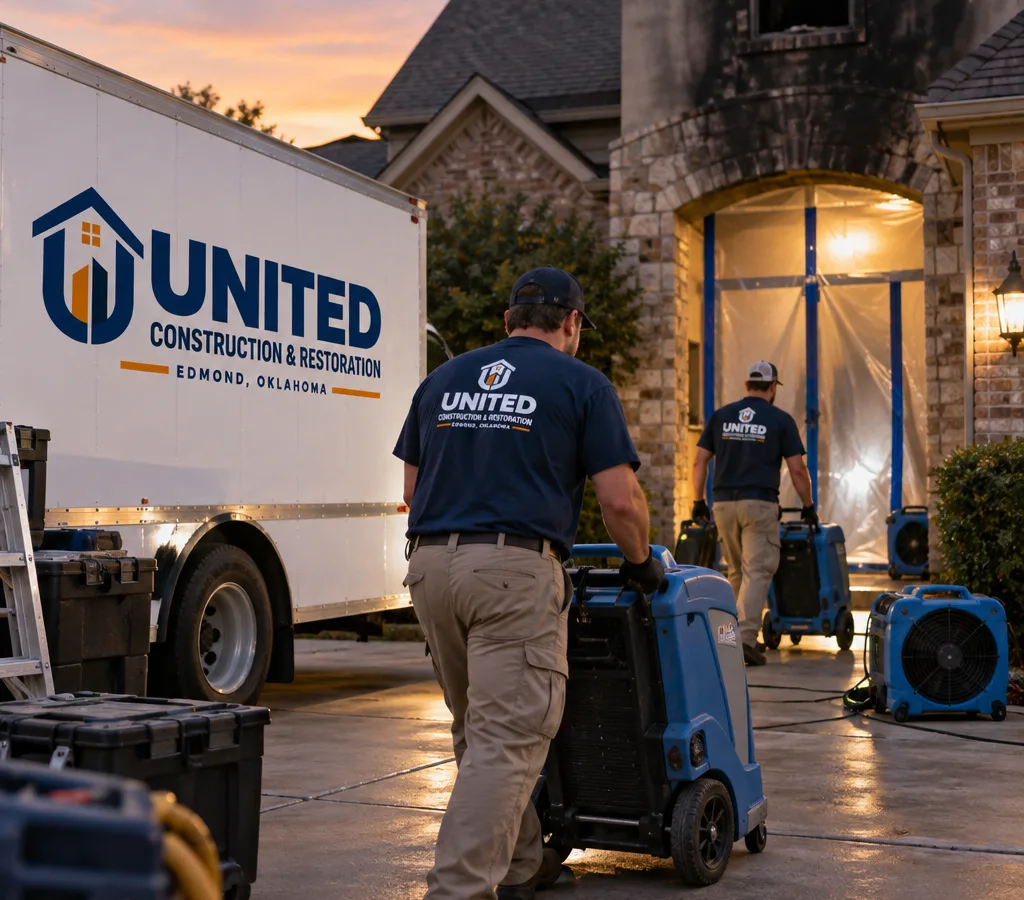
Fire damage restoration Oklahoma City work is more than removing charred materials. A good restoration plan addresses what you can see—burned drywall, framing, and contents—and what you cannot, including soot in HVAC paths, smoke odor absorbed into insulation, and acidic residue on metals.
United Construction & Restoration supports homeowners and property managers in the Oklahoma City metro from our Edmond base. After an initial inspection, we build a written scope that separates urgent stabilization from the longer repair phase, so your home stays protected while decisions are made.
Typical fire restoration in Oklahoma City can include:
After the active fire is out, the next practical step is a site inspection to identify what must be removed, what can be cleaned, and what needs to be isolated to keep soot from spreading into unaffected rooms.
Protect the structure first
The first 24 to 72 hours are about preventing secondary damage. Soot is acidic and can permanently stain or corrode finishes. Water used to put out the fire can soak framing and flooring, raising the risk of swelling, delamination, and mold.
Here is what we focus on right away during fire damage restoration in the Oklahoma City area:
If you are unsure whether it is safe to enter or start cleaning yourself, it is better to pause. Disturbing soot without containment can drive it deeper into soft goods and ductwork, making restoration harder and more expensive later.
Restoration contractor standards
You should get a clear plan that lists affected rooms, materials to remove, cleaning methods, and what rebuild items are included.
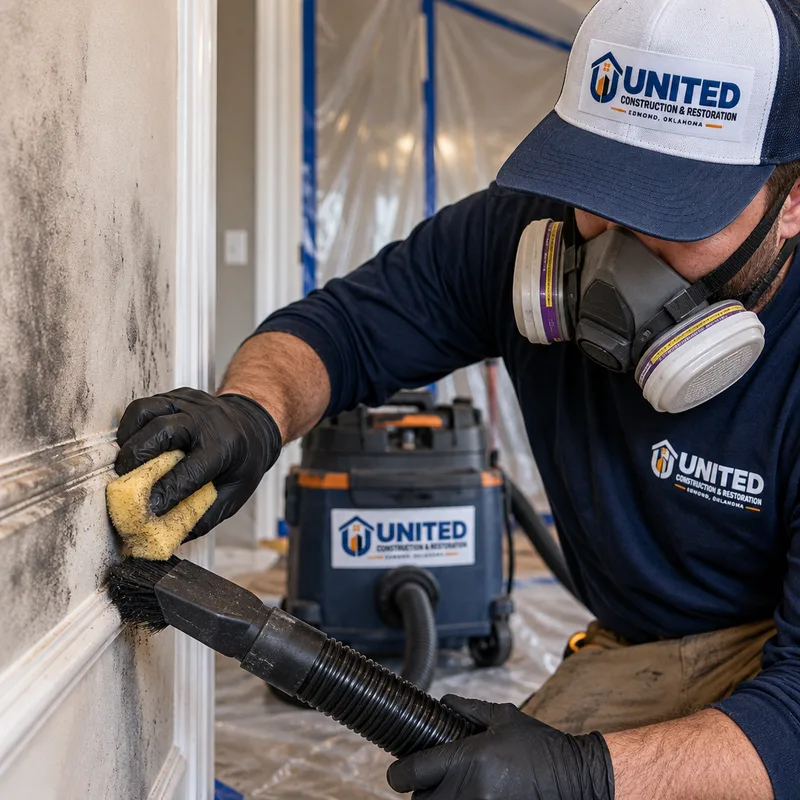
Removing damaged drywall is only part of the job. Proper soot removal, filtration, and odor control protect the parts of the home that were not burned.
Photos, moisture readings where needed, and itemized notes help keep the claim moving and reduce back-and-forth on what is necessary.
Some items can be cleaned, deodorized, or packed out for off-site handling. Others need safe disposal. The difference is often in the early evaluation.
Fire damage restoration OKC projects often stall after cleanup. A single point of responsibility from demolition through rebuild keeps timelines realistic.
Inspection through rebuild
Step 1 of 5
We assess structural impact, soot spread patterns, water impact from suppression, and immediate hazards. We also identify what can be isolated and what must be removed.
Step 2 of 5
If openings need to be secured, we address that early. Containment barriers and air filtration are set so work does not contaminate unaffected rooms.
Step 3 of 5
We remove only what is unsalvageable or required to access affected cavities. Controlled demolition reduces unnecessary rebuild costs.
Step 4 of 5
Surfaces are cleaned with methods appropriate to the material. For persistent odor sources, sealing strategies may be recommended after cleaning to lock in remaining residue.
Step 5 of 5
Once the structure is clean and dry, we rebuild insulation, drywall, paint, trim, flooring, cabinets, and final details so the space is ready for normal use.
Restoration budget planning
Fire damage restoration in Oklahoma City typically ranges from about $3,000 to $12,000 for a small, contained incident, while larger losses with multiple rooms, heavy soot, or structural repairs often run $20,000 to $75,000+ depending on the rebuild scope. Smoke odor work, HVAC cleaning, water damage from suppression, and the amount of demolition required are major cost drivers. The most accurate number comes after an on-site inspection with a written scope that separates cleanup from repairs.
Book Your Free InspectionOKC homes and weather
In the OKC metro, wind and sudden weather shifts can turn a compromised roof opening or broken window into a bigger loss quickly. That is why board-up and temporary weather protection are often part of the earliest phase.
Housing variety also changes the approach. Newer builds may have tighter envelopes that hold smoke odor longer, while older homes can have more pathways for soot to travel into wall cavities and attics. In either case, the goal is the same: stop soot migration, clean what is salvageable, and rebuild what cannot be saved.
For broader repair work beyond fire cleanup, property owners should consider whether a full restoration and rebuild partner can coordinate the project from start to finish.
“After the fire, the smell was the worst part. They walked us through what had to come out, what could be cleaned, and what needed to be sealed before paint. The house finally stopped smelling like smoke and the repairs matched the rest of the rooms.”
“We appreciated getting a written scope instead of vague promises. The containment kept soot out of the bedrooms, and the cleanup phase did not turn into unnecessary demolition.”
Fire restoration questions
Cleanup should start as soon as the property is released as safe to enter because soot residue is acidic and can stain or corrode surfaces quickly. Early containment and HEPA filtration also reduce the chance of soot spreading into clean rooms and HVAC pathways.
Smoke odor can be removed long-term when the source is actually cleaned and any remaining residue is properly sealed. Odor often returns when only deodorizing products are used without soot removal in porous materials like drywall paper, insulation, and unfinished wood.
Not always, but insulation and drywall often need removal when smoke traveled through cavities or when water from suppression soaked the materials. The decision depends on soot penetration, what can be cleaned safely, and whether odor persists after surface cleaning.
Fire restoration includes contamination control, specialized cleaning for soot residue, odor mitigation planning, and documentation for insurance, not just construction repairs. A remodel changes finishes by choice, while restoration starts by making the structure clean, safe, and stable.
Yes, we can provide photos, notes, and an itemized scope that helps support the claim and clarify what is required for a safe restoration. Final coverage decisions come from the carrier, but clear documentation reduces delays and misunderstandings.
Small losses may take several days for cleanup and several more for repairs, while larger fires can take weeks or longer depending on the rebuild and material lead times. The timeline is driven by demolition, drying time from suppression water, and structural repairs.
Tell us what happened and what parts of the home were affected. United Construction & Restoration will inspect the damage, outline the safest next steps, and provide a written scope for cleanup and repairs in the Oklahoma City area.