Water restoration service in Edmond, Oklahoma

Water Damage Restoration Edmond

Water moves fast through drywall, flooring, and cabinets. Get a clear plan for drying, cleanup, and repairs so the damage does not spread to hidden areas.

✓Moisture mapping ✓Controlled structural drying ✓Documented moisture readings
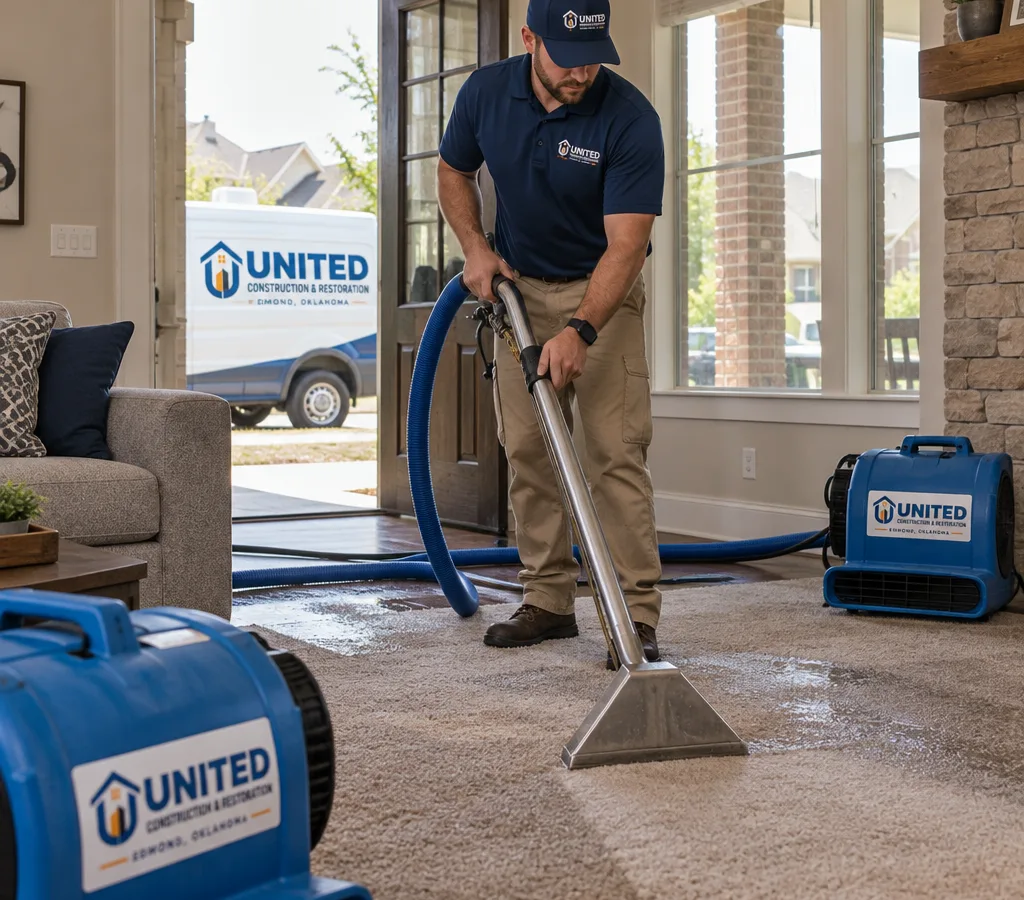
Technician extracting water from wet carpet in an Edmond home with air movers staged nearby

A measured response to hidden moisture

Fast, practical help when water gets into your home

If you are searching for water damage restoration Edmond homeowners can trust, the goal is simple: stop the source, remove water, dry the structure, and document the work so repairs can move forward.

United Construction & Restoration provides water restoration in Edmond for common events like supply line breaks, overflowing fixtures, appliance leaks, roof leaks after storms, and water intrusion that soaks flooring and baseboards. The sooner drying starts, the less likely you are to face swelling wood, delaminated laminate, cracked grout from movement, or microbial growth in wall cavities.

Edmond sits in the Oklahoma City metro, so many homes have mixed materials under one roof: slab-on-grade foundations, engineered wood products, and layered floor systems. Those assemblies can trap moisture where you cannot see it. A proper water damage restoration approach is built around moisture mapping, controlled drying, and repeat checks, not guesswork.
Book Your Free Inspection

From extraction to repair-ready

What full water damage restoration includes

Emergency water stop and safety check

If it is safe to do so, the first step is stopping the water and checking for electrical risks around wet outlets, light fixtures, and equipment. When a source is still active, extraction and drying will not keep up.

Water extraction and removal

Standing water is removed with professional extraction tools. Wet padding, saturated carpet, and soaked underlayment can hold a surprising amount of water and may need targeted removal to dry the structure.

Moisture mapping and drying plan

Moisture meters and thermal tools help identify where water traveled. Drying is then set up with the right airflow and dehumidification so wall cavities, subfloors, and framing can return to normal moisture levels.

Selective demo when materials cannot be dried

Some materials are not salvageable once saturated. Controlled, limited removal—for example, affected drywall or baseboards—can be the fastest path to a dry, repair-ready home.

Cleaning, odor control, and sanitizing

After drying, affected areas may need cleaning and treatment based on the category of water and what the water touched. Odor control focuses on removing the source, not masking it.

Documentation for a smoother repair phase

Photos, readings, and scope notes create a record of what was wet and what was done. This is helpful when coordinating with an adjuster or planning repairs and material replacement.

Book Your Free Inspection

Every water loss is different

Water restoration in Edmond: what changes the plan

Not every water loss is the same, and the right restoration plan depends on how far water traveled and what it contacted.

  • Clean water versus contaminated water: A supply line break is handled differently than an overflow that contacted waste. Water category affects cleaning methods, what materials can be saved, and how the space is contained.
  • Time since the loss: The longer materials stay wet, the more likely you are to see swelling, staining, and microbial concerns. Early extraction and controlled drying reduce secondary damage.
  • Construction details: Tile over backer board, floating floors, and cabinet toe-kicks can hide moisture. Moisture mapping helps confirm whether drying can happen in place or whether selective removal is the safer path.

In Edmond, many homeowners start with a restoration crew and then need a contractor to put everything back together. If you also want a single team to coordinate the repair side after the area is dry, our general contractors in Edmond, OK can walk you through what that phase typically involves.

Book Your Free Inspection
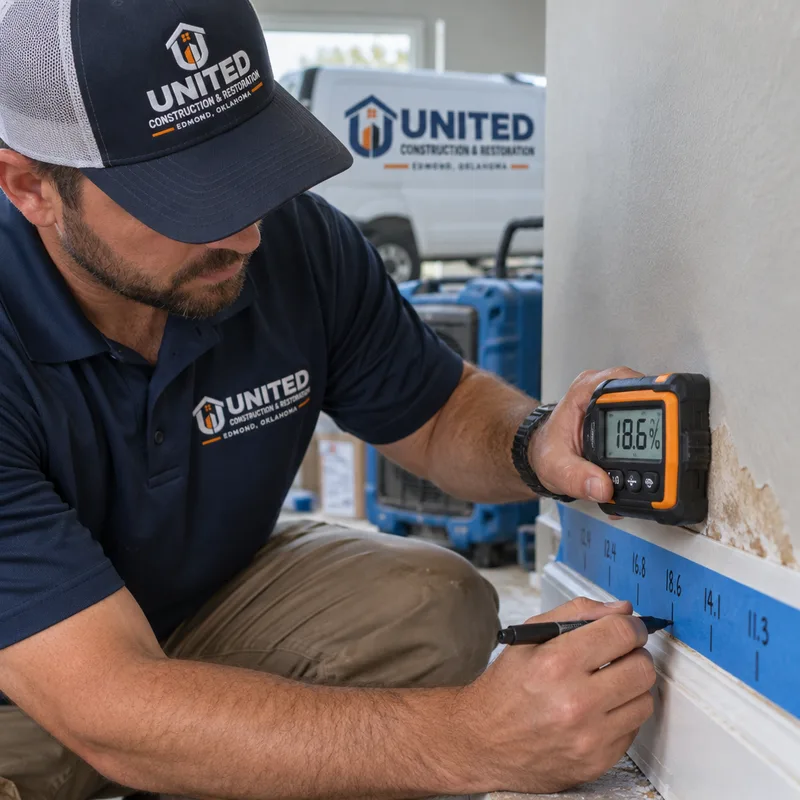
Technician taking moisture readings at a baseboard and drywall seam while marking a moisture map

Inspection through repair clearance

Our water damage restoration process (what to expect)

  1. Step 1 of 5

    Initial inspection and moisture readings

    We identify affected rooms and take baseline moisture readings in floors, walls, and trim. You get a plain-language explanation of what is wet and what the realistic drying path is.

  2. Step 2 of 5

    Immediate mitigation: extraction and protection

    We remove standing water, protect unaffected areas, and set containment if needed. Contents are moved or protected so drying equipment can do its job without spreading debris.

  3. Step 3 of 5

    Drying setup and daily monitoring

    Air movers and dehumidifiers are placed based on the loss, not by room count. We monitor progress with repeat readings and adjust equipment placement as materials dry.

  4. Step 4 of 5

    Targeted removal if required

    If trapped moisture cannot be dried in place, we remove only what is necessary to access and dry the structure. This step often prevents a smaller loss from turning into a larger repair.

  5. Step 5 of 5

    Clearance to repair

    Once materials reach acceptable moisture levels, we document the dry standard and outline next steps. At that point, repairs can begin with confidence that you are not closing up wet materials.

Book Your Free Inspection

Restoration budget planning

How Much Does Water Damage Restoration Cost in Edmond?

Water damage restoration in Edmond typically ranges from about $1,200 to $6,500+, with small, localized drying at the lower end and multi-room losses with removal and rebuild prep at the higher end. Projects that involve contaminated water, saturated cabinets, or wet subfloors can cost more because the scope expands beyond basic drying.

Your price depends on how many materials are affected, whether drywall or flooring needs selective removal, how long drying takes, access to wet cavities, and what documentation is required. The exact cost is confirmed after an on-site inspection and moisture mapping.

Book Your Free Inspection

Homeowner results

Clear guidance through drying and cleanup

“A supply line leaked while we were out, and the floors were squishy when we got home. They explained what had to come out, showed us moisture readings, and kept checking until everything was dry. The plan was clear, which helped a lot when we started repairs.”
Megan R.
“After an overflow, we were worried the smell would never go away. The drying setup and follow-up checks made a difference, and the rooms were ready for repairs without lingering damp spots.”
Chris T.

Restoration questions answered

Water Damage Restoration Edmond OK: common questions

How quickly should water damage restoration start after a leak or flood?

Restoration should start as soon as you can safely stop the source, because water can wick into drywall, insulation, and subfloors within hours. Early extraction and drying in Edmond homes often prevents secondary damage like swelling trim, buckled flooring, and hidden moisture pockets that later cause odors.

Can you dry wet drywall and baseboards, or do they need to be removed?

Sometimes they can be dried in place, but if moisture is trapped behind finishes or wicks high up the wall, selective removal is often the safer option. The decision is made with moisture readings and an inspection of how far water traveled, especially around cabinets, corners, and exterior walls.

What is the difference between water mitigation and water damage restoration?

Mitigation is the immediate work that stops ongoing damage, like extraction, drying setup, and containment. Water damage restoration includes the full path to a repair-ready space, including documenting dry conditions and addressing materials that cannot be saved so repairs can start on stable, dry structure.

Do I need to leave the house while drying equipment runs?

Many homeowners can stay home during water restoration, but it depends on the affected rooms, noise, and whether any contaminated water is involved. If containment is needed or a bathroom or kitchen is out of service, we will explain realistic options before equipment is set.

What should I do right now while waiting for a restoration team?

First, stop the water source if it is safe, then avoid using electrical outlets or lights near wet areas. Move small valuables and paperwork out of affected rooms, and avoid running HVAC if you suspect water was pulled into returns. If you can safely blot or extract small amounts of clean water, it may help, but do not pull up flooring or open walls unless you know what is underneath.

Will you work with my insurance adjuster for a water damage claim?

Yes, we can provide photos, moisture readings, and a written scope of what was affected and what was required to dry and clean the area. In Edmond, claim handling varies by policy and loss type, so the best next step is to document the damage early and keep a clear record of what was wet and what work was performed.

Get a clear plan for drying and cleanup before damage spreads

Tell us what happened and what areas are affected. United Construction & Restoration will inspect, map moisture, and outline the next steps for water restoration in Edmond so you can move forward with confidence.