Containment and negative air
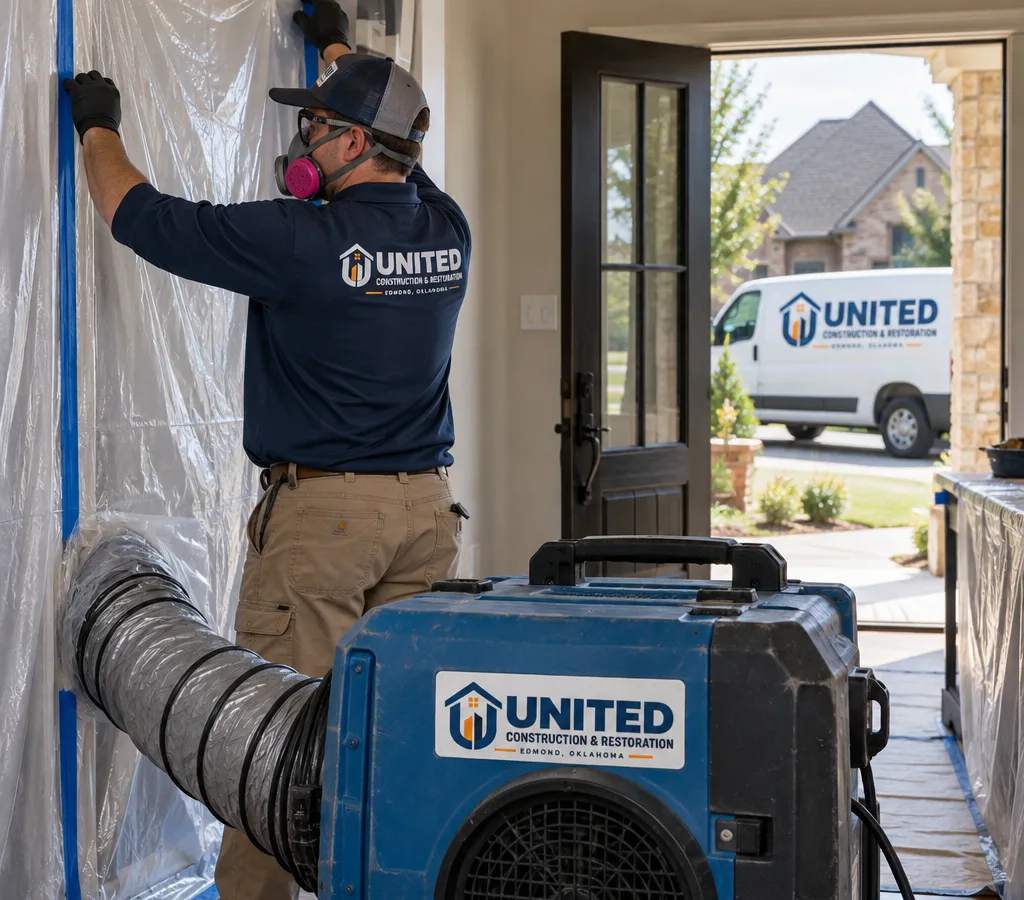
We isolate the work area with poly sheeting and maintain negative pressure where needed, so disturbed spores and dust stay in the contained zone instead of migrating to clean rooms.
Mold remediation service in Edmond, Oklahoma
Get a clear plan for finding the moisture source, containing the affected area, and removing mold safely so your home can get back to normal.
Containment starts with the source
If you are searching for mold remediation Edmond OK, you usually need two things quickly: answers about where the mold is coming from and a remediation plan that does not spread contamination through the house. United Construction & Restoration helps Edmond homeowners with mold inspection, mold removal, and remediation work that follows a written scope, with practical steps you can understand.
Mold is rarely a stand-alone problem. The work succeeds when the moisture source is identified and corrected, the affected area is properly contained, and contaminated materials are removed or cleaned using methods that fit the surface. A solid remediation job also includes drying and verification steps so you are not paying to treat the same issue twice.
Edmond's storms and humid periods can turn a small roof leak, window leak, or HVAC drain issue into hidden growth behind drywall, under flooring, or in a closet corner. If you have a musty odor, recent water intrusion, visible growth, or family members reacting to a space, schedule an inspection before you start tearing materials out yourself.
Inspection before disruption
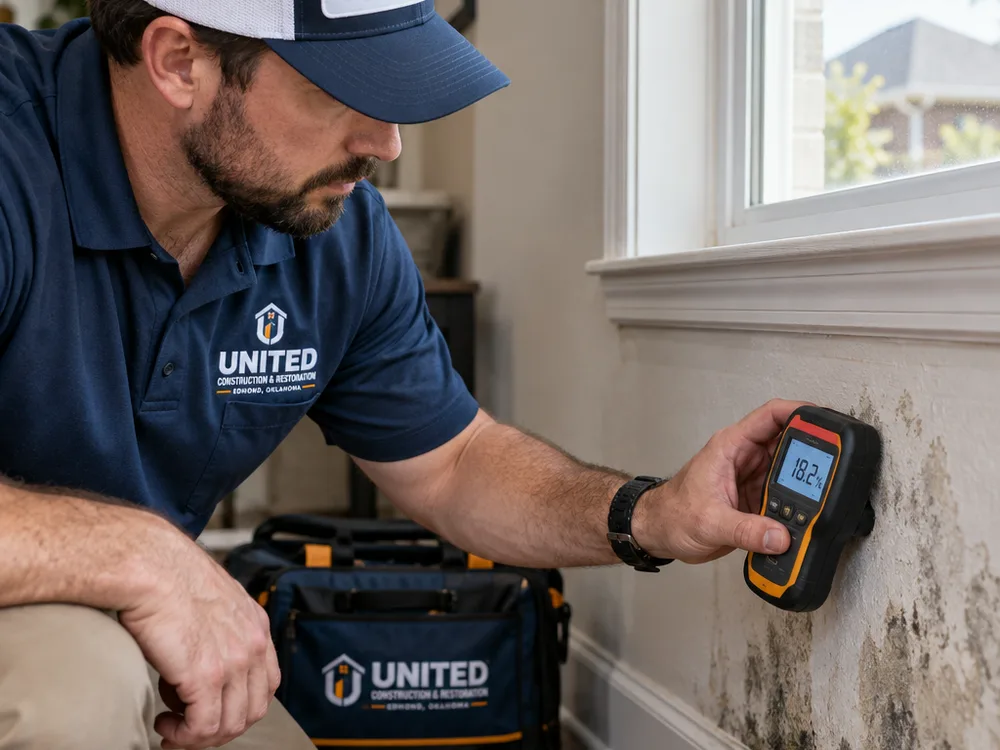
A proper mold inspection Edmond homeowners can act on starts with moisture, not with guessing. We begin by asking what changed: a storm event, a plumbing leak, a slow drip under a sink, a damp crawlspace, or a bathroom that never dries out. Then we inspect the materials and the likely pathways for moisture movement.
Typical inspection steps include:
You should come away with a clear scope: what areas are affected, what materials need removal versus cleaning, what containment is required, and what needs to be fixed to stop recurrence. If you are also comparing broader repair help for the water damage that triggered the problem, it helps to understand who can coordinate the full sequence.
A defined remediation plan
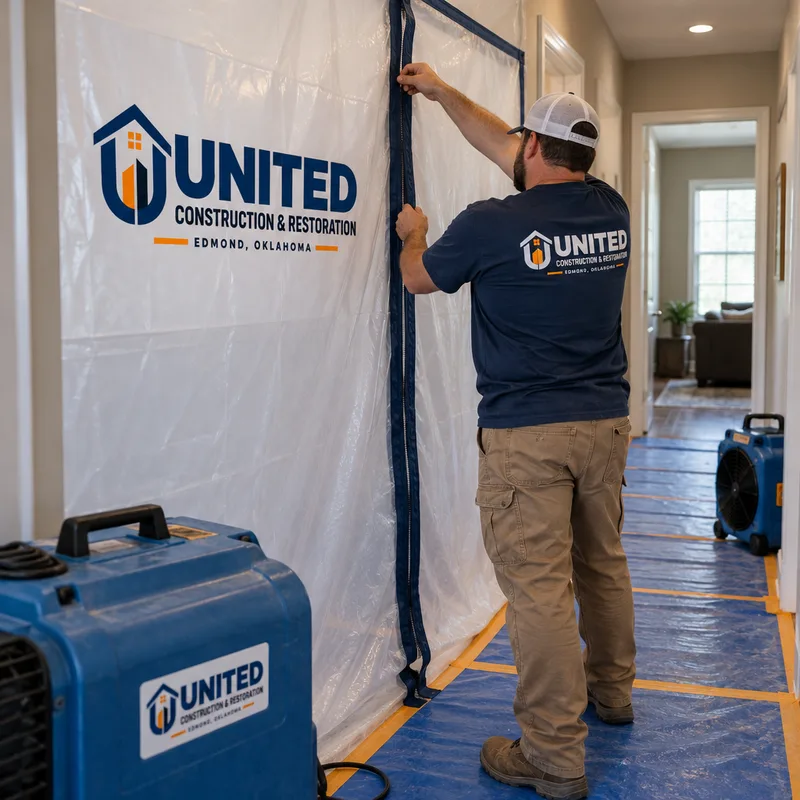
We isolate the work area with poly sheeting and maintain negative pressure where needed, so disturbed spores and dust stay in the contained zone instead of migrating to clean rooms.
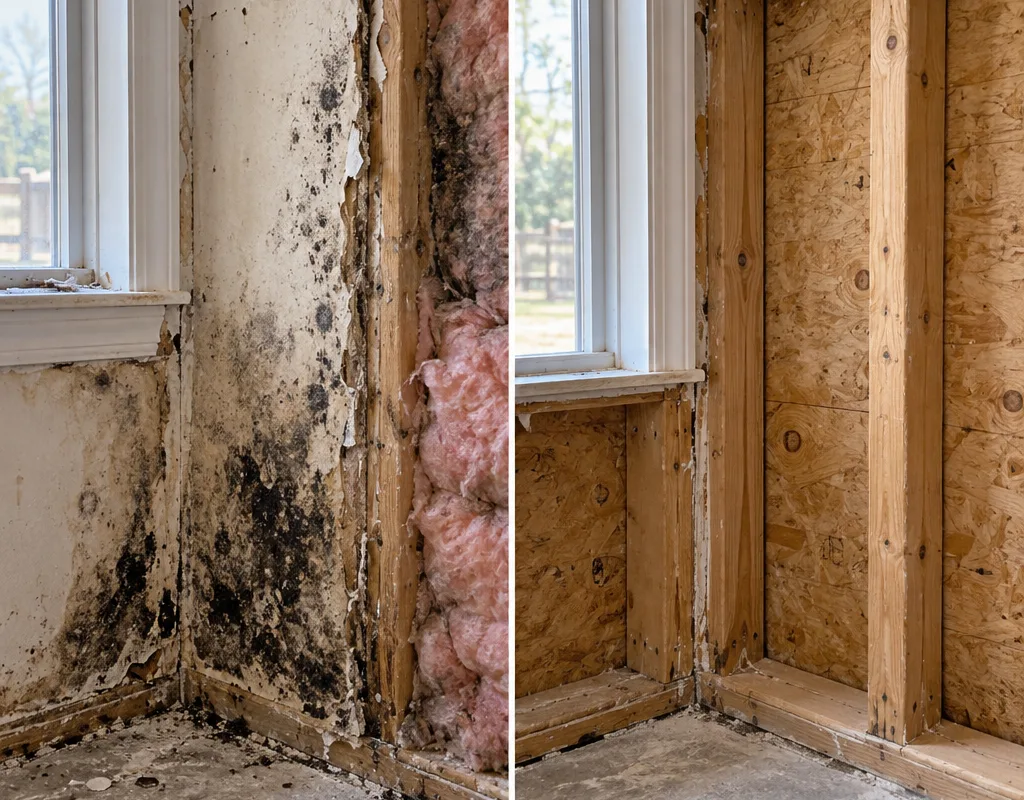
Porous materials that cannot be reliably cleaned—often drywall, insulation, and some carpeting—are removed. Semi-porous and non-porous surfaces are cleaned using methods appropriate to the substrate.
HEPA air scrubbers and HEPA vacuuming help capture fine particles during and after demolition. Final cleaning focuses on ledges, studs, and cavities before rebuilding starts.
Remediation holds when the space is dry. We address wet building materials and discuss ventilation, drainage, and leak repairs so conditions do not support regrowth.
You get a defined work area, what is included, what is excluded, and the sequence of work. That helps you compare bids and avoid surprise add-ons.
Before containment comes down, we confirm the area is clean and dry. If third-party clearance testing is requested, we coordinate access and timing.
Inspection through verification
Step 1 of 5
We assess the suspected areas, check moisture, and define the likely extent. You receive a remediation plan sized to the affected materials, not a one-size template.
Step 2 of 5
We protect floors and contents, establish containment barriers, and set negative air filtration when the situation calls for it. This step prevents cross-contamination.
Step 3 of 5
We remove unsalvageable porous materials, clean remaining structural components, and manage debris handling so it exits the home with minimal spread.
Step 4 of 5
We confirm materials are drying and discuss the moisture driver, including leaks, humidity, drainage, or ventilation. Remediation without moisture correction is temporary.
Step 5 of 5
We HEPA vacuum and detail-clean the area, then verify conditions are appropriate to close the cavity or begin repairs. If you want independent clearance testing, we plan the timing for a post-clean space.
Remediation budget planning
Most mold remediation Edmond OK projects typically range from about $1,000 to $6,000+, depending on how far the affected materials spread and how much demolition is required. A small, contained area with limited drywall removal may land closer to the low end, while multi-room, crawlspace, or HVAC-involved situations can run higher.
Final pricing depends on the size of the containment zone, what materials are porous versus cleanable, access such as an attic or crawlspace, drying needs, and whether the moisture source needs repair work. The exact cost is confirmed after the on-site inspection and a written scope.
Containment, cleaning, verification
“They explained what was actually causing the mold, set up containment so the rest of the house stayed clean, and the scope matched what happened on site. The whole process felt organized instead of chaotic.”
“We had a musty smell after a leak. The inspection was thorough and the removal work was done with a clear plan. The area dried out properly and we were comfortable closing everything back up.”
Answers before work begins
Yes. We start with a mold inspection in Edmond to identify the affected areas and the moisture driver, then we complete the mold removal and remediation work based on a written scope. That sequence keeps the work targeted and helps prevent spreading contamination.
Scheduling depends on current demand and the urgency of your situation, but we prioritize active leaks, recent water intrusion, and situations where the affected area is growing. The fastest way to move forward is to request an inspection so we can define the containment needs and sequence.
Often you can stay in the home if the work area can be fully contained and separated, but it depends on where the mold is and how much demolition is required. We will talk through who should avoid the area, how access is controlled, and what to expect day to day before work starts.
Drywall is porous, so if mold has penetrated the paper facing or the core, removal and replacement is usually the reliable approach. When growth is only on the surface, such as from localized condensation, we evaluate whether cleaning is appropriate, but we do not promise a cleanable outcome without seeing the material condition.
Bleach can lighten staining on non-porous surfaces, but it is not a reliable remediation method for porous building materials and it can interfere with understanding the extent of the problem. If possible, avoid spraying chemicals before an inspection; instead, limit disturbance of the area and focus on stopping any active water source.
Mold returns when moisture returns. The most common reasons are an unaddressed leak, high indoor humidity, poor bathroom ventilation, wet insulation in an attic, or a damp crawlspace. Successful mold remediation in Edmond includes a plan to correct the moisture conditions, not just cleaning what you can see.
Sometimes, depending on what caused the moisture and what your policy covers. We can document findings and the remediation scope, but coverage decisions come from the carrier. During the inspection we can tell you what information is usually helpful to gather for a claim.
Tell us what you are seeing—odor, visible growth, a recent leak, or humidity issues—and we will schedule an inspection in Edmond to map the affected area, identify the moisture source, and outline the safest path to remediation.