Source control and safety steps
Guidance to shut off the water source when possible, evaluate electrical hazards, and separate affected areas to limit spread and protect indoor air.
Water damage restoration in Oklahoma City
When water gets into drywall, flooring, or cabinets, time matters. Get a clear plan for cleanup, drying, and repairs so your home can be safely restored with as little disruption as possible.
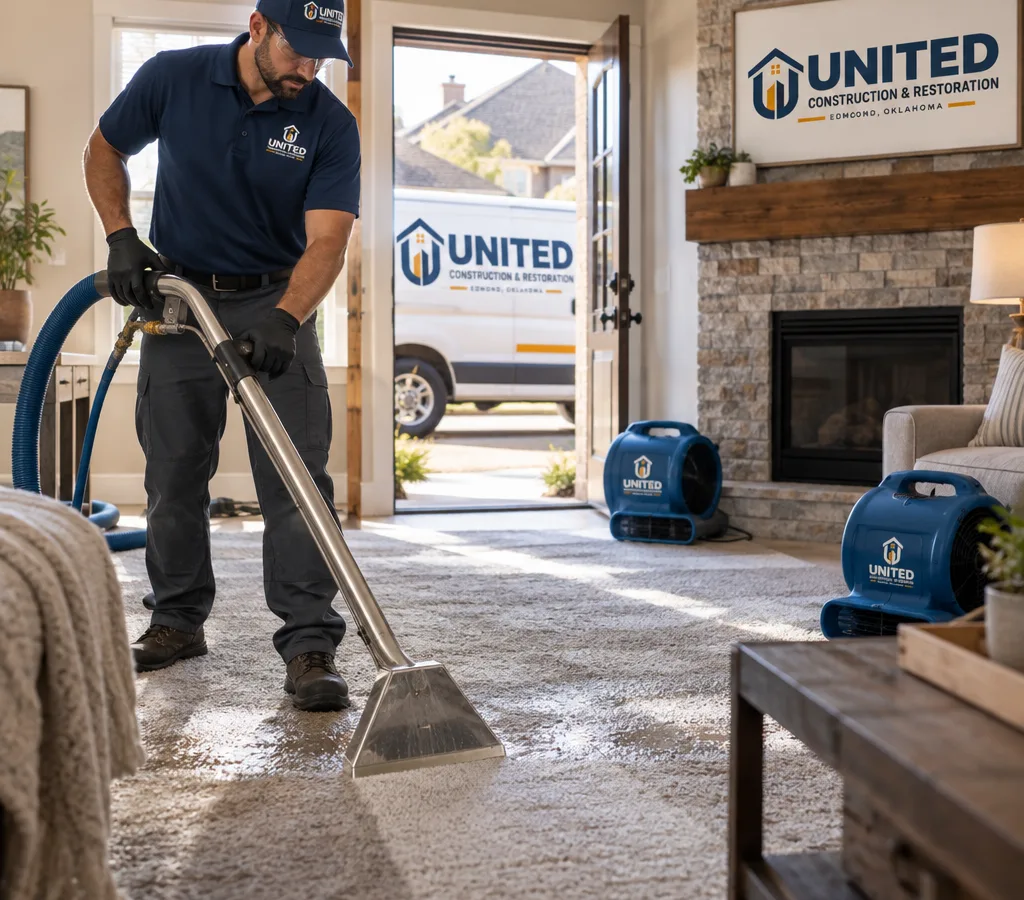
Cleanup, drying, and repair
If you are searching for water damage restoration OKC, you are probably dealing with a burst supply line, an overflowing tub, a leaking water heater, or stormwater that found its way in. United Construction & Restoration provides water damage restoration in the Oklahoma City area with a straightforward goal: stop the spread, dry the structure the right way, and repair what was damaged so the space is safe to live in again.
We are based in Edmond (73034) and commonly help homeowners across the north metro where quick response reduces secondary damage. Water travels under baseboards, behind cabinets, and into wall cavities fast. Even when things look dry on the surface, moisture can stay trapped and lead to swelling, delamination, odor, and microbial growth.
What you should expect from a professional restoration team is simple: a documented inspection, visible drying equipment sized to the loss, moisture checks during the dry-out, and a repair scope that puts your home back to pre-loss condition as closely as practical.
Complete loss response
Guidance to shut off the water source when possible, evaluate electrical hazards, and separate affected areas to limit spread and protect indoor air.
Removal of standing water using professional extractors, plus targeted removal of wet materials when they cannot be dried in place.
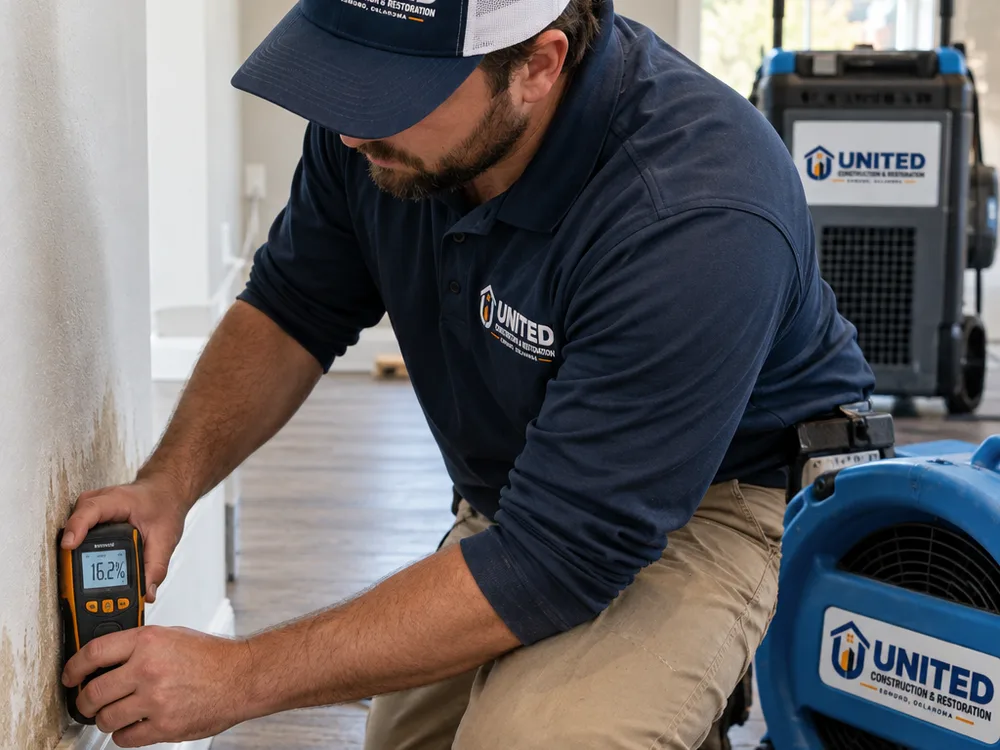
Air movers and dehumidifiers set up to meet the conditions on site, with moisture readings taken in framing, drywall, and subfloor until dry goals are met.
Cleaning of affected surfaces and contents handling as appropriate, with treatment steps selected for the category of water involved.
When materials are unsalvageable, we remove only what is necessary—for example, baseboards, portions of drywall, or flooring sections—and then complete the rebuild and finishes.
Photos, notes, and moisture logs that support decision-making and help keep restoration and repair aligned with the actual condition of the structure.
Measured drying decisions
Water damage is not one problem. It is a chain of problems that starts with liquid water and ends with materials that are warped, contaminated, or still damp inside assemblies. Our approach stays consistent because the building science stays consistent.
First, we verify the water source and the affected footprint. Moisture moves into the lowest points and along framing, so we check beyond the obvious wet spot. In homes with slab foundations, moisture can migrate under flooring; in homes with crawl spaces, it can impact subflooring and insulation. Either way, drying decisions should be based on readings, not appearances.
Next, we set drying goals and select equipment to match. Effective drying usually needs controlled airflow across wet surfaces and dehumidification to pull moisture out of materials and the air. We monitor progress and adjust equipment placement as conditions change.
Finally, we shift into water damage repair in Oklahoma City: replacing damaged drywall, trim, flooring, and cabinetry components as needed, then preparing and finishing the space so it is ready for normal use again. If you are comparing options for broader work beyond restoration, our team also supports homeowners who need a reliable general contractor in Edmond for related projects once the water loss is stabilized.
Inspection through rebuild
Step 1 of 5
We walk the affected areas, identify the likely path of water, take initial readings, and outline immediate priorities for safety and damage control.
Step 2 of 5
We extract standing water, remove items that block drying, and place air movers and dehumidifiers to start reducing moisture load right away.
Step 3 of 5
If materials cannot be dried safely—commonly drywall that wicked up water or swollen flooring—we remove them in a contained, targeted way to expose wet cavities for drying.
Step 4 of 5
We track drying progress with moisture readings, reposition equipment, and document conditions until target dry standards are met for the affected materials.
Step 5 of 5
After drying, we rebuild what was removed: drywall, texture, paint, trim, flooring, and other finishes. The goal is a complete, livable restoration, not a partial fix.
Restoration budget planning
Water damage restoration in Oklahoma City typically ranges from about $1,500 to $8,000+, with small, clean-water losses on the lower end and multi-room or contaminated-water losses higher. A single room with extraction and drying often falls around $1,500 to $3,500, while larger losses that require removing drywall or flooring and rebuilding can run $4,000 to $12,000+.
Final cost depends on how far water traveled, the category of water, how long materials stayed wet, what must be removed to dry correctly, and how much repair work is needed afterward. Exact pricing is confirmed after an on-site inspection and moisture mapping.
Homeowner experiences
“A supply line leak soaked our kitchen and the hallway. The crew explained what had to come out, set up drying equipment, and kept checking moisture until it was actually dry. The repair work matched the existing trim and paint better than we expected.”
“After an upstairs overflow, water showed up in the ceiling below. They found wet insulation we would have missed, dried it correctly, and handled the drywall repair so we could move on.”
Restoration questions answered
Start cleanup and drying the same day whenever possible, because water can wick into drywall, framing, and flooring quickly and increase the amount of material that has to be removed. If the water source is still active, shut it off first and avoid rooms where water is near outlets or light fixtures until power safety is confirmed.
Sometimes drywall can be dried in place, but drywall that has swollen, softened, or wicked water up from the bottom often needs to be removed to dry the wall cavity safely. Insulation that has been saturated usually loses performance and can hold moisture, so removal is common when it is wet.
Restoration focuses on mitigation steps like extraction, drying, cleaning, and preventing secondary damage, while repair is the rebuild work that puts finishes back, such as drywall, paint, trim, flooring, and cabinetry components. Many projects need both phases to fully return the space to normal use.
Many losses dry in about 3 to 5 days, but the timeline depends on the materials affected, how much water entered the structure, and how quickly drying started. Dense materials, layered flooring systems, and concealed wet areas can extend the dry-out.
Yes. Plumbing leaks often involve clean water at first, while storm intrusion can bring in debris and contamination depending on where water entered. The water source and category affect what cleaning steps are needed and what materials can be saved.
If it is safe, stop the water source, move small valuables away from wet areas, and blot or mop up excess water to limit spread. Avoid running household fans into wall cavities or under flooring without guidance, because uncontrolled airflow can push moisture deeper into assemblies.
Tell us what happened and what areas are affected. We will schedule an on-site inspection, explain the drying and repair plan, and provide a written scope so you can make the next decision with confidence.